 Skip to content
Soap Making
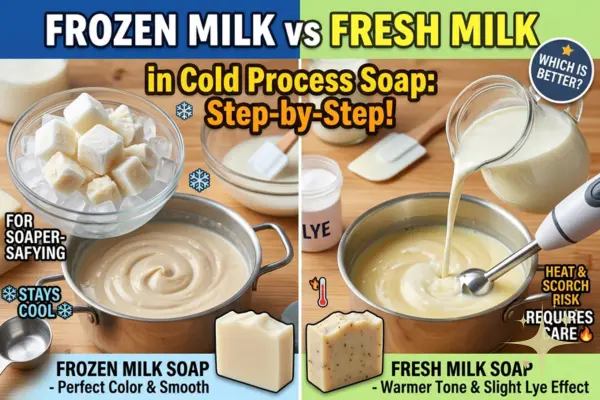
Frozen Milk vs Fresh Milk in Cold Process Soap: Step-by-Step
Frozen Milk vs Fresh Milk in Cold Process Soap: Step-by-Step Frozen milk (added slowly to lye as ice cubes) gives you the whitest, most scorch-resistant bar but takes 12–24 hours of advance prep and closer temperature monitoring. Fresh milk added at light trace instead of the lye is faster and beginner-friendly, but it usually produces
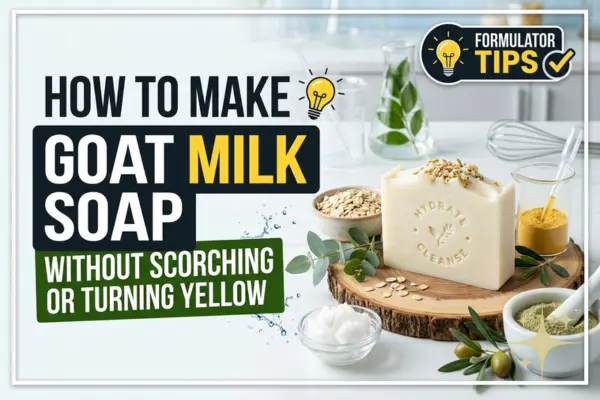
How to Make Goat Milk Soap Without Scorching or Turning Yellow
How to Make Goat Milk Soap Without Scorching or Turning Yellow Direct answer: To make goat milk soap without scorching, freeze the goat milk solid before you touch it with lye, then add the lye in small spoonfuls directly onto the frozen milk while it sits in an ice bath, stirring slowly so the mixture
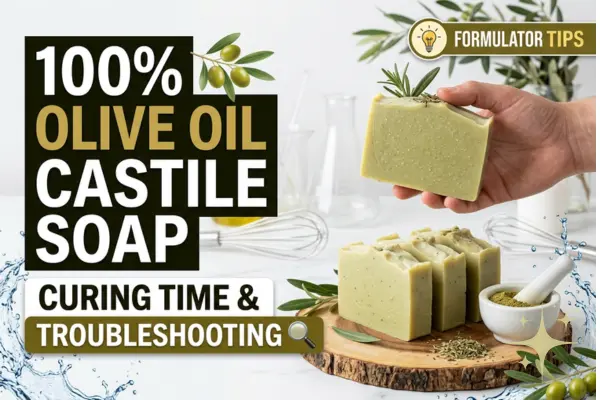
100% Olive Oil Castile Soap: Curing Time & Trace Troubleshooting
100% Olive Oil Castile Soap: Curing Time & Trace Troubleshooting 100% Olive Oil Castile Soap: Curing Time & Trace Troubleshooting Direct answer: 100% olive oil Castile soap requires a minimum of 4–6 weeks to cure, but reaches its full potential at 6–12 months, with the best bars developing at 12 months of curing. During those
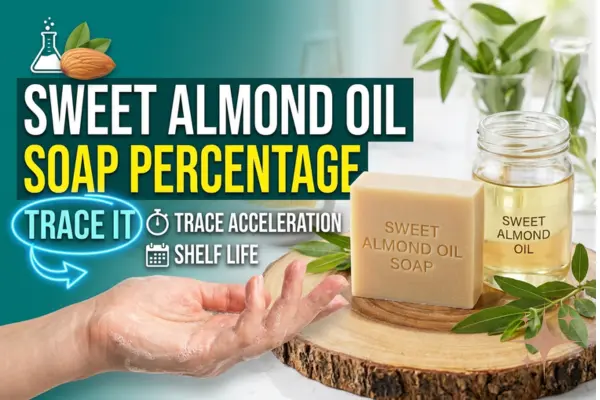
Sweet Almond Oil Soap Percentage: Trace Acceleration & Shelf Life
Sweet Almond Oil Soap Percentage: Trace Acceleration & Shelf Life Sweet Almond Oil Soap Percentage: Trace Acceleration & Shelf Life Direct answer: Sweet almond oil works best at 5–15% of total oils in cold process soap, with most soapmakers gravitating toward 10% for the optimal balance of skin conditioning without excessive softness. At this percentage,
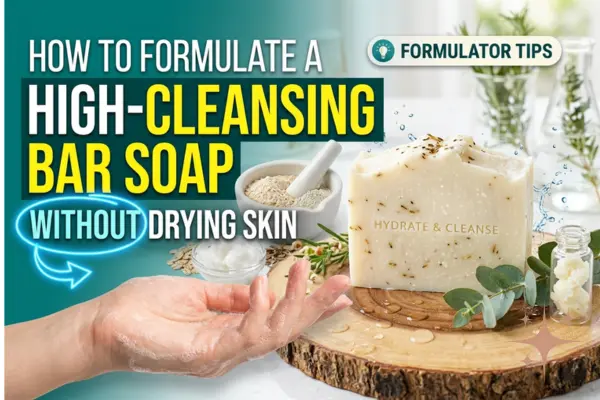
How to Formulate a High-Cleansing Bar Soap Without Drying Skin
Soap Making · Formulation Strategy How to Formulate a High-Cleansing Bar Soap Without Drying Skin Direct answer: You can formulate a high-cleansing bar soap without drying skin by decoupling two variables most soapers treat as one: cleansing power (driven by lauric and myristic acid, mainly from coconut, babassu, or palm kernel oil) and dryness (driven

Sunflower Oil in Cold Process Soap: Maximum Percentage & Trace Speed
Soap Making · Oil Selection Guide Sunflower Oil in Cold Process Soap: Maximum Percentage & Trace Speed Direct answer: Regular (high-linoleic) sunflower oil should be capped around 15-20% of total oils in cold process soap, because its high linoleic acid content (roughly 65-70%) makes it prone to rancidity and DOS (dreaded orange spots) at higher

Cocoa Butter vs Shea Butter in Soap: Usage Rates & Differences
Soap Making · Butter Comparison Cocoa Butter vs Shea Butter in Soap: Usage Rates & Differences Direct answer: Cocoa butter makes soap harder and traces faster, thanks to its high palmitic and stearic acid content and near-zero unsaponifiable fraction (under 1%); the standard usage rate is 5-15% of total oils, occasionally pushed to 25% for

Lard vs Tallow in Soap Making: Hardness, Cleansing, and Ratios
Soap Making · Fat & Oil Comparison Lard vs Tallow in Soap Making: Hardness, Cleansing, and Ratios Direct answer: Tallow (rendered beef fat) makes a harder, longer-lasting, more cleansing bar with big, loose bubbles, while lard (rendered pork fat) makes a softer, creamier bar with a gentler, more three-dimensional lather. Tallow is roughly 50% saturated

How Much Castor Oil to Use in Soap for Maximum Lather
Soap Making · Formulation Guide How Much Castor Oil to Use in Soap for Maximum Lather Quick answer: For most cold process bath and body soap, use castor oil at 5% of your total oil weight. Facial bars work best at 2–3%, shampoo bars can push to 8–12%, and shaving soap benefits from 15–20%. Cross
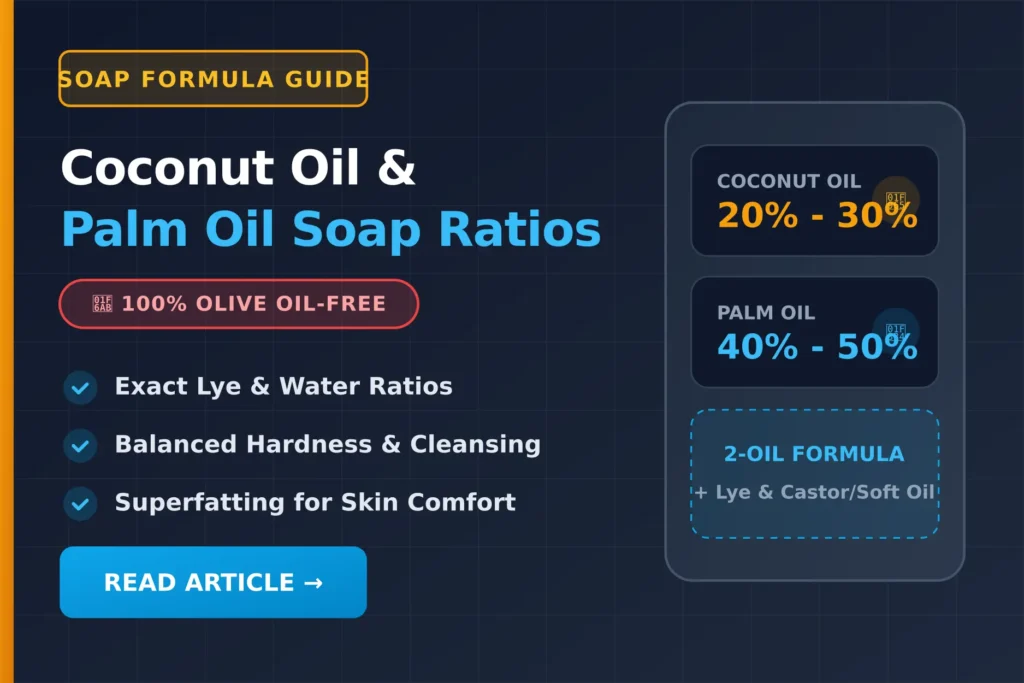
Coconut Oil & Palm Oil Soap Ratios (Without Olive Oil)
Coconut Oil & Palm Oil Soap Ratios The ideal coconut oil and palm oil soap ratio for hard, cleansing bars is 30–40% coconut oil and 25–35% palm oil, combined with supporting oils to reach full saponification. This ratio produces excellent lather, hardness, and cleaning power without olive oil, yielding a fast-curing bar that’s ready to
The Ultimate Cold-Process Soap Making Guide: Ratios, Formulas & Lye Safety
2,400+ words 13 min read Formulator-reviewed Updated 2026 ⏱ Estimated read time: 12–14 minutes Let’s be direct: most beginner soap-making failures — soft bars, harsh cleansing, seized batter — trace back to one thing: getting the oil-to-lye ratio wrong. A cold process soap making guide for beginners only earns its name if it actually explains
